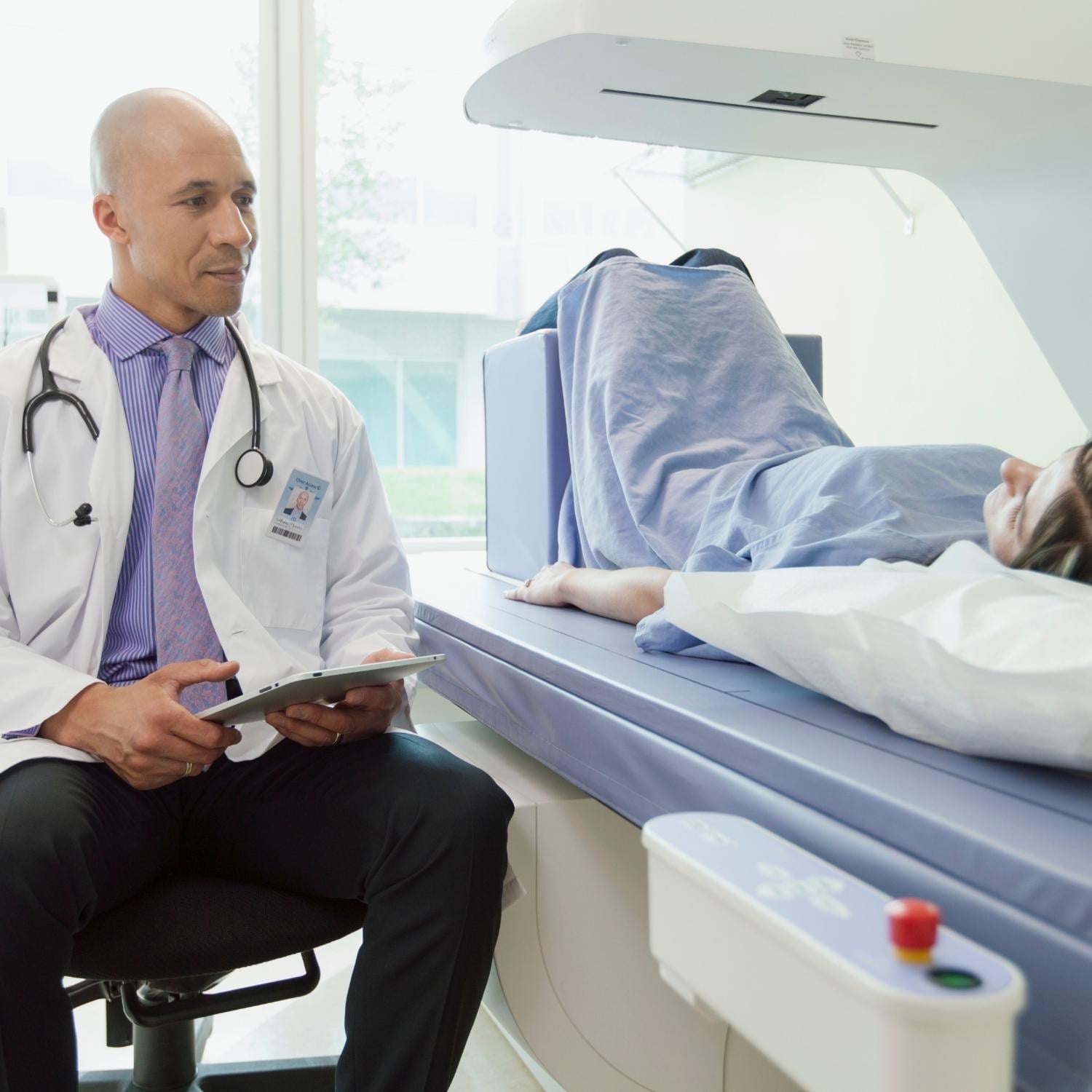
For most of the last decade, the story of CT in Ontario was a queue. Volumes climbed, with national CT numbers growing roughly 90 per cent between 2006 and 2023, from about 3.4 million scans a year to 6.4 million, while scanner capacity and the technologists and radiologists to run and read them did not keep pace.
Then the licensing framework changed, and 2026 is the year CT access in Ontario actually shifted. This CT scan Ontario guide explains what changed, what a CT scan is and how it differs from ultrasound and MRI, what OHIP covers, what the current waits look like, how contrast works, and how to think honestly about radiation dose.
Quick Facts: CT Scans in Ontario
CT scans are covered by OHIP when medically necessary and ordered by a physician or nurse practitioner, and there is no self-referral for diagnostic CT. Ontario licensed 35 community centres for publicly funded MRI and CT in June 2025, with the first licence going to Richmond Hill. As of June 2026, urgent CT scans averaged one day while non-urgent scans averaged 79 days provincially. Charging patients for OHIP-insured services is illegal in Ontario. King City Diagnostic Imaging now offers CT scans in King City, booked with a valid requisition from your physician or nurse practitioner.
What Changed in Ontario in 2025 and 2026
In September 2023, the Integrated Community Health Services Centres Act replaced the older Independent Health Facilities Act. In June 2024, Ontario opened applications for community centres to operate publicly funded MRI and CT. In June 2025, the province announced $155 million over two years for 57 new community surgical and diagnostic centres, 35 of them licensed for MRI and CT, targeting roughly 828,000 additional scans over two years.
The first licence in the province went to a site that matters to anyone reading this from King City, Richmond Hill or Aurora: the Schroeder Ambulatory Centre in Richmond Hill. Referrals opened in March 2026 and the first OHIP-funded patient was scanned there on April 7, 2026. The centre is fully OHIP-funded and runs high-performance CT alongside 1.5T and 3T MRI, including a weight-bearing orthopaedic CT that images joints while the patient stands, which is uncommon in Ontario.
Whether publicly funded care delivered by community operators is good policy remains a live political question, with vocal critics arguing the money should go to hospitals instead. What is not in dispute is that if you live in York Region, there is now more CT capacity within a short drive than there was two years ago.
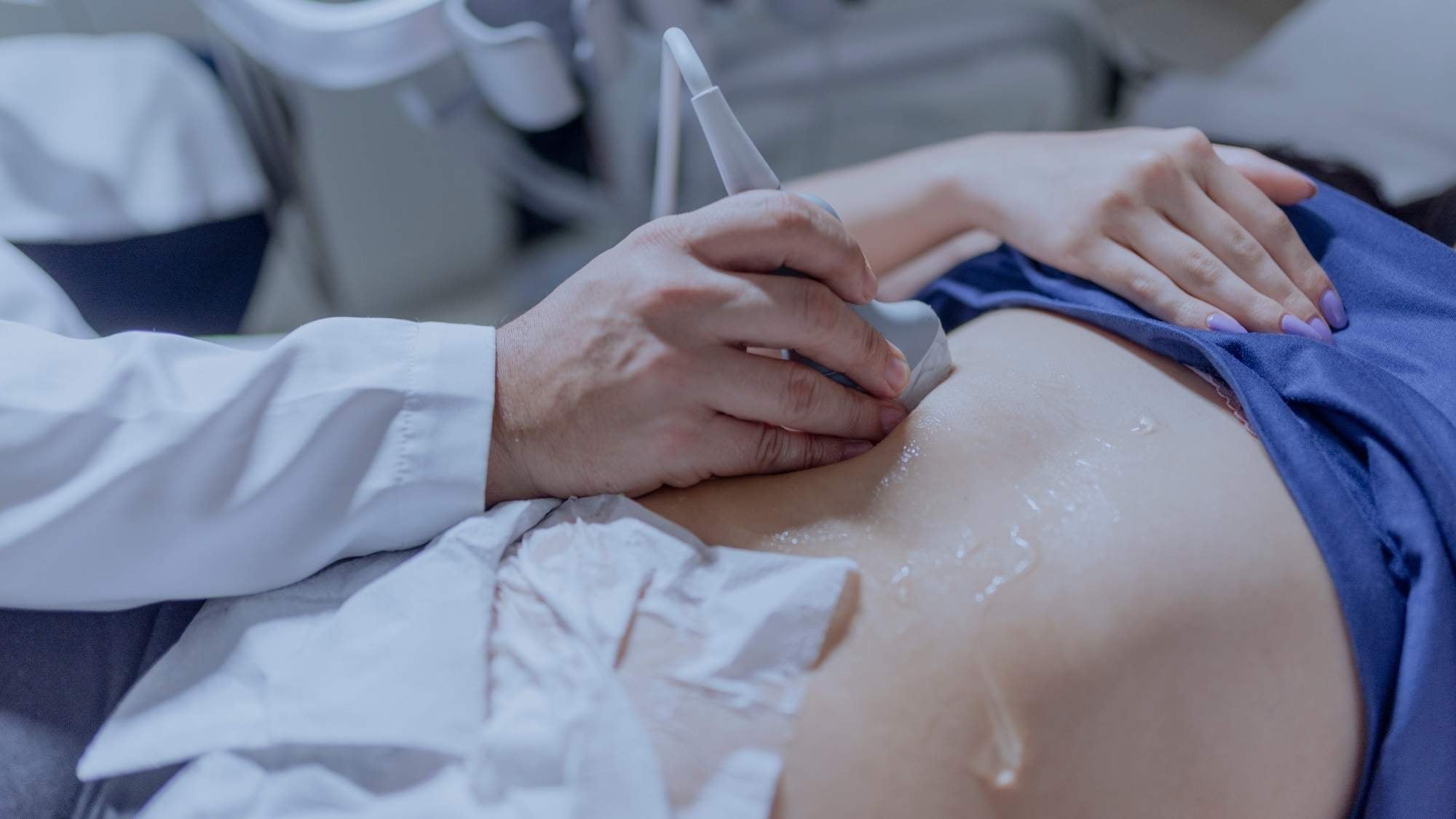
Ultrasound answers many clinical questions with no radiation at all, and books far faster than CT.
What a CT Scan Is, and How It Differs From Other Imaging
A CT scanner is an X-ray machine that rotates. Instead of one flat projection, which is what a conventional X-ray gives you with everything in the body overlapping onto a single image, a CT takes hundreds of X-ray measurements from every angle around you and reconstructs them into cross-sectional slices. Think of it as the difference between a photograph of a loaf of bread and being able to look at every slice individually. Those slices can then be reformatted into any plane or stacked into a three-dimensional model.
Compared with the alternatives: a plain X-ray is fast and low dose but structures overlap. Ultrasound uses sound waves with no radiation at all, works in real time, and is safe in pregnancy, but it is blocked by bone and gas and depends heavily on operator skill. CT uses X-rays to produce cross-sectional detail in seconds, making it the workhorse for trauma, abdominal pain, chest disease, kidney stones and blood vessels. MRI uses a magnetic field and radio waves with no radiation and gives superior soft tissue detail, but takes 15 to 60 minutes or more and excludes patients with certain metal implants.
One useful piece of reassurance: metal is a safety exclusion for MRI but only an image quality issue for CT. A pacemaker or metal implant that rules you out of an MRI generally does not rule you out of a CT.
Is a CT Scan Covered by OHIP in Ontario?
Yes, when it is medically necessary and ordered by a physician or nurse practitioner. There is no fee to you. Since July 2023, nurse practitioners can order CT as an OHIP-insured service for any region of the body.
There is no self-referral for diagnostic CT in Ontario. You cannot book one yourself the way you can book a screening mammogram, and that requirement exists for a real reason we return to in the radiation section below.
Ontario’s rules on what a licensed centre may charge are worth stating plainly. It is illegal for centres to charge you for services insured by OHIP, to charge you for preferential access to insured services, or to charge facility costs relating to insured services. The provincial position is equally blunt on upgrades: no centre may refuse an insured service to a patient who chooses not to purchase uninsured upgrades.
So the answer to “can I pay to get a CT faster in Ontario?” is no, not for an insured service at a licensed centre. What you can do is choose a facility with a shorter queue, which is not the same thing and is entirely legitimate. Ontario states that requisitions for insured services are valid at any location providing that service, and that you are not restricted to the facility printed on your form.
Genuinely uninsured imaging does exist. Exams requested by an employer, an insurer, a lawyer or a court are third-party services and are not OHIP-covered, and those must be disclosed and priced up front.
CT Scan Ontario Wait Times: What to Actually Expect
CT scan Ontario wait times are not a single number, because Ontario does not run one queue. It runs four, and a radiologist decides which one you are in based on your symptoms, your history and clinical guidelines, not on when you called.
Priority 1, emergent, targets 24 hours. Priority 2, urgent, targets 48 hours. Priority 3, semi-urgent, targets 10 days. Priority 4, non-urgent, targets 28 days.
Provincial CT performance for June 2026 was as follows. Priority 2 averaged one day, with 96 per cent meeting the 48-hour target. Priority 3 averaged 27 days against a 10-day target, with 45 per cent within target. Priority 4 averaged 79 days against a 28-day target, with 35 per cent within target and a 90th percentile of 182 days.
Read that last line carefully, because it is the one most readers are in. The average non-urgent CT wait is about eleven weeks, but one in ten people waits roughly six months. That spread between the average and the 90th percentile is the real story of Ontario imaging, and it is largely a story about which facility your form went to.
Locally in June 2026, non-urgent CT averaged 39 days at Mackenzie Health Richmond Hill, 64 days at Cortellucci Vaughan, and 114 days at Southlake in Newmarket, against a provincial average of 79 days. Same priority level, same province, and a three-fold difference depending on the address on the requisition.
Practical steps that genuinely help shorten your wait: ask your doctor whether you would be willing to travel to a shorter-wait facility, ask about evening and weekend appointment slots, and ask to be put on the cancellation list, because cancellations happen constantly and short-notice slots frequently go to whoever answers the phone. You can check current waits for any Ontario facility using Ontario Health’s public wait times tool.
Contrast, and Two Myths Worth Retiring
Many CT scans require contrast, an iodine-based liquid injected into a vein that makes blood vessels, organs and areas of inflammation stand out. Some abdominal scans also use oral contrast, a flavoured drink that outlines the bowel, which takes about an hour to travel far enough and is why those appointments run longer.
What the injection feels like. This is the most useful thing to know in advance and almost nobody is told. As the contrast goes in you will likely get a warm flush spreading through your body, a metallic taste in your mouth, and, the one that startles people, a strong sensation that you have just wet yourself. You have not. It passes in under a minute, it happens to nearly everyone, and knowing it is coming is the difference between a mildly odd experience and thirty seconds of panic on a scanner table.
Myth one: “I am allergic to shellfish, so I cannot have contrast.” This has been received wisdom in waiting rooms for fifty years and it is wrong. A joint consensus statement from the American College of Radiology and the American Academy of Allergy, Asthma and Immunology, published in 2025, states directly that patients with seafood or shellfish allergy are not at elevated risk from iodinated contrast and should not be premedicated on that basis. The idea traces back to a methodologically weak study from 1975.
Myth two: “I am allergic to iodine.” Iodine is an element your thyroid requires to function and is not an allergen. Reactions to contrast media relate to the physical and chemical properties of the specific agent, not its iodine content.
What does matter is a documented previous reaction to a contrast agent, and specifically which agent. For context on actual risk, immediate reactions to modern low-osmolality contrast occur in roughly 0.3 to 1.4 per cent of injections, most of them mild, with severe reactions between 0.005 and 0.06 per cent.
Kidney function and metformin. Canadian guidance has relaxed considerably. The Canadian Association of Radiologists found in 2022 that the risk of contrast causing kidney injury is likely very low, and that acute kidney injury after a contrast-enhanced CT is no more common than after an unenhanced one. For most people with normal kidney function the guidance is not to stop metformin and not to retest kidney function afterwards. That said, individual facilities and ordering physicians still apply their own protocols. Follow the instructions your clinic gives you, and never stop a prescribed medication on your own.
Radiation: The Honest Version
Radiation is the question most people have about a CT scan Ontario doctors order, and we are not going to soft-pedal it, because patients can tell when they are being managed.
Typical effective doses are roughly as follows. A chest X-ray is 0.1 mSv, about ten days of background radiation. A low-dose CT for lung screening is 1.5 mSv, about six months. A CT head is 1.6 mSv, about seven months. A CT chest is 6.1 mSv, about two years. A CT abdomen and pelvis is 7.7 mSv, about 2.6 years. A CT spine is 8.8 mSv, about three years.
So a chest CT is roughly the equivalent of 60 chest X-rays, or about two years of the background radiation everyone absorbs from soil, air, food and cosmic rays regardless of what they do.
That is a real dose and it deserves a real answer. Three things are true at once. First, there is no conclusive evidence of cancer risk at CT dose levels, and the risk models used to estimate harm at these doses are extrapolations that remain contested. Second, the risk of a missed or delayed diagnosis is usually the larger risk, and a CT that finds a treatable cancer, a bleed or an obstruction is not a close call. Third, the scan worth avoiding is the unnecessary one, which is precisely why CT requires a physician’s order and why appropriateness guidelines exist.
Dose reduction is also improving quickly. Low-dose protocols are standard for lung screening and kidney stones, and a screening chest CT at 1.5 mSv against 6.1 mSv for a routine one is a four-fold reduction achieved through protocol design alone. Newer reconstruction techniques, including deep-learning image reconstruction, cut image noise so effectively that lower doses now produce diagnostic images.
Lung Cancer Screening: The One CT You Can Refer Yourself For
Ontario runs an organized low-dose CT lung screening program, and unusually, you can self-refer.
Eligibility is based on age, tobacco history, OHIP coverage and a calculated six-year lung cancer risk assessed by a screening navigator. Meeting the basic criteria does not guarantee eligibility, as the navigator runs a formal risk assessment first. You can either have your primary care provider submit a referral or contact an Ontario Lung Screening Program site directly yourself.
The program has completed more than 70,000 screening tests since its 2017 pilot, including over 15,000 in 2025 and 2026, and expanded to 15 sites province-wide with five new locations added in March 2026. Sites are concentrated in Toronto, Hamilton, Mississauga, Brampton, Oshawa, London, Ottawa, Sudbury and Thunder Bay. Check the current locations and eligibility criteria for the site nearest you, as the criteria have been updated recently.
Common Questions About CT Scans in Ontario
Is a CT scan covered by OHIP?
Yes, when medically necessary and ordered by a physician or nurse practitioner. There is no charge to you.
Can I get a CT scan without a doctor’s order?
No. Diagnostic CT requires a referral in Ontario. The only self-referral CT pathway is the Ontario Lung Screening Program for eligible high-risk individuals.
Can I pay privately for a CT scan in Ontario to skip the line?
Not for an insured service at a licensed centre, as charging for OHIP-insured services or preferential access is illegal in Ontario. You can, however, choose a facility with a shorter wait.
What are current CT scan Ontario wait times?
It depends on your priority level and your facility. Urgent scans averaged one day in June 2026. Non-urgent scans averaged 79 days provincially, ranging from 39 to 114 days across York Region hospitals.
How can I get scanned sooner?
Ask your doctor to send you to a shorter-wait facility, ask about evening and weekend slots, and get on the cancellation list.
I am allergic to shellfish. Can I have contrast?
Yes. Seafood and shellfish allergy is not a risk factor for iodinated contrast reactions. What matters is a previous reaction to a contrast agent itself.
Do I have to stop my metformin?
Canadian guidance no longer recommends stopping metformin before contrast for most people with normal kidney function, but follow the instructions your facility gives you and never stop a prescribed medication on your own.
Is the radiation dangerous?
A chest CT is about two years’ worth of natural background radiation. There is no conclusive evidence of cancer risk at CT dose levels, and the risk of a missed diagnosis is generally larger.
CT or MRI, which is better?
Neither. They answer different questions. CT is faster and better for bone, chest, bleeding, stones and blood vessels. MRI has no radiation and is better for soft tissue, brain and spinal cord.
Imaging Available at King City Diagnostic Imaging
King City Diagnostic Imaging offers CT scans, with images analyzed by a radiologist within 24–48 hours and the report faxed directly to your referring physician. We also provide walk-in X-ray, ultrasound, mammography, bone mineral density, FibroScan, vascular ultrasound and cardiology at 1700 King Road, King City, with free parking and Saturday hours.
If your doctor has ordered a CT, you can book your CT scan with us once you have a requisition; our CT scan page explains preparation, contrast and what to expect. For many other clinical questions, ultrasound answers what is being asked without any radiation at all, and it books here within one to two business days. Our guide to Ontario imaging wait times and OHIP coverage explains how to find a shorter queue and what you are entitled to.