If you have been told you need a bone density scan, the two questions that follow an OHIP bone density test referral are almost always the same: does OHIP pay for it, and how often am I allowed to have one? Both answers changed in 2026, and the change caused enough disruption that Osteoporosis Canada issued a public objection and the Ministry subsequently issued a clarification.
This guide covers the coverage and frequency rules, how to prepare, and how to read your T-score. If you are looking for a broader introduction to osteoporosis risk factors and why testing matters, start with our companion article on bone density testing and osteoporosis after 50.
Quick Facts: OHIP Coverage for Bone Density Testing
Bone mineral density testing is covered by OHIP when ordered by a physician or nurse practitioner, and only axial DXA of the hip and spine is covered. Following a Ministry clarification applied retroactively to April 1, 2026, routine repeat testing for patients over 50 is generally once every three years or longer based on FRAX-calculated fracture risk, with more frequent testing permitted where clinically necessary and documented. Bring the date of your last scan when you book. The scan takes 10 to 30 minutes and uses about 0.001 mSv, less than a tenth of a chest X-ray.
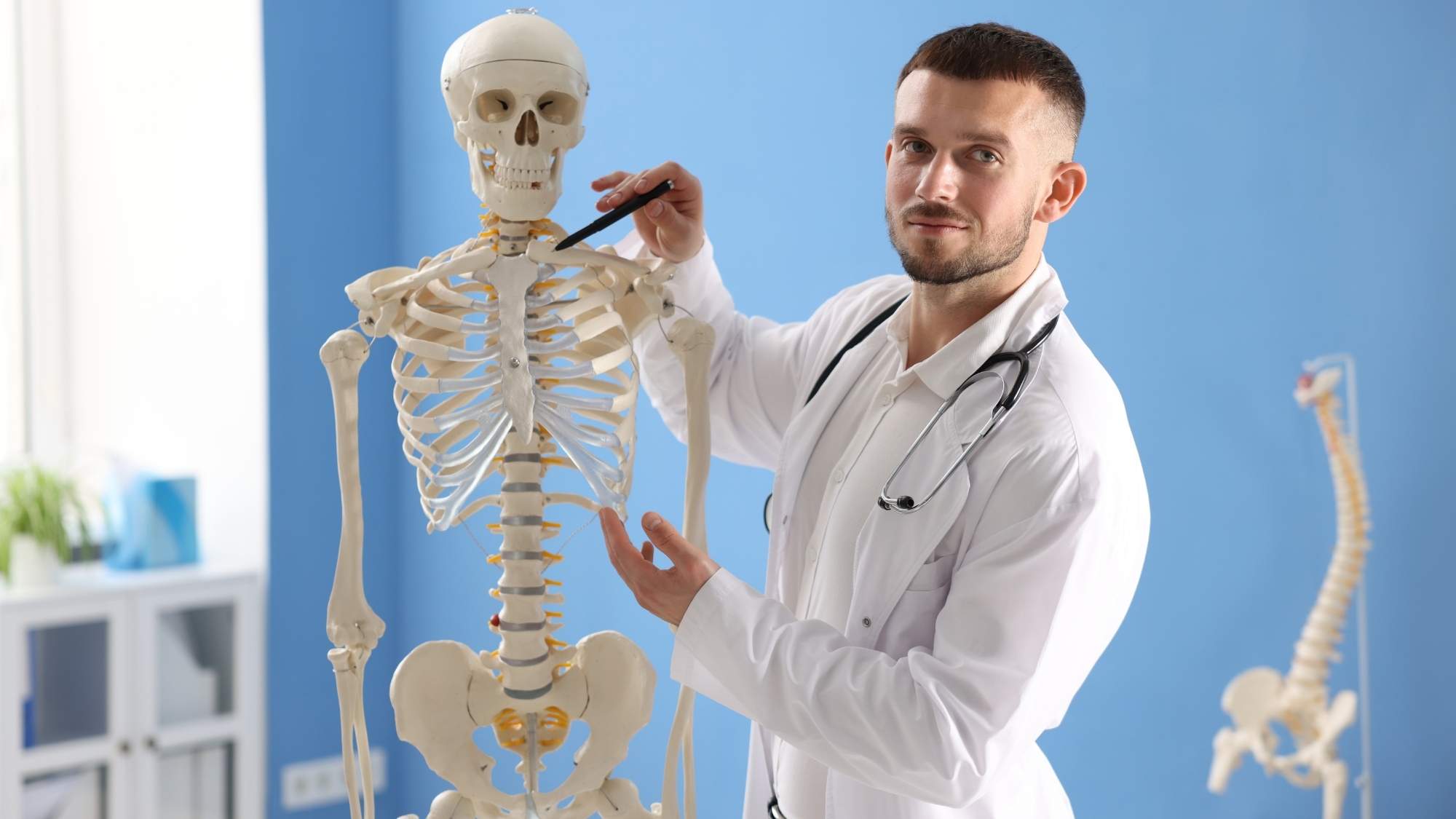
Only axial DXA of the hip and spine is covered by OHIP. Pharmacy heel scans are not equivalent.
What an OHIP Bone Density Test Covers in Ontario
An OHIP bone density test is an insured service in Ontario when ordered by a physician or nurse practitioner. There is no charge to you.
Only axial DXA, meaning hip and spine, is covered. Peripheral devices that scan a heel or a wrist at a pharmacy or health fair are not covered and are not equivalent. They can flag someone who should get a proper scan, but they cannot diagnose.
The baseline scan is at your ordering clinician’s discretion, based on your age and risk factors.
Since July 2023, nurse practitioners can order OHIP-insured diagnostic imaging, so an NP requisition is entirely valid.
How Often You Can Repeat the Scan: The 2026 Rules
Repeat scans are where the rules changed this year.
On April 1, 2026, Ontario redefined follow-up eligibility around calculated ten-year fracture risk rather than clinical risk factors, and narrowed the circumstances permitting a twelve-month repeat. Osteoporosis Canada objected publicly on the grounds that this was inconsistent with its own 2023 clinical practice guideline.
The Ministry subsequently issued a billing clarification, applied retroactively to April 1, 2026. According to summaries published by Osteoporosis Canada and the Ontario Rheumatology Association, the position now in effect is as follows.
Patients over 50, routine monitoring: a subsequent BMD once every three years or longer, according to fracture risk assessed with FRAX, aligned with the Osteoporosis Canada 2023 guideline.
Patients under 50: eligible at clinically appropriate frequencies, as the three-year rule does not restrict this group.
Any age, where testing is diagnostically necessary: may occur more frequently than every three years based on clinical need, with the reasoning documented in the medical record.
The Osteoporosis Canada guideline itself scales the interval to risk, suggesting a repeat in five to ten years if your ten-year major fracture risk is under 10 per cent, five years at 10 to 15 per cent, and three years at 15 per cent or above, with earlier reassessment if you develop a secondary cause, sustain a new fracture, or acquire another risk factor for rapid bone loss.
One thing that has not changed and that patients must do: tell the clinic the date of your last BMD when you book. Ontario verifies coverage eligibility against previous test dates, and if the facility does not know, your scan can be rejected for billing. Bring the date, or the prior report. If you are unsure whether you are currently eligible, your ordering clinician is the right person to confirm before you book.
Who Should Be Screened
Osteoporosis Canada’s 2023 clinical practice guideline sets screening out by age.
Ages 50 to 64: if you have had a previous osteoporosis-related fracture, or you have two or more clinical risk factors.
Ages 65 and over: if you have at least one clinical risk factor.
Ages 70 and over: everyone, with no risk factors required.
The clinical risk factors are a fragility fracture after age 40, a parent who fractured a hip, glucocorticoid use such as prednisone, secondary causes of osteoporosis including rheumatoid arthritis, coeliac disease, hyperthyroidism, inflammatory bowel disease and early menopause, current smoking, high alcohol intake, one or more falls in the past twelve months, and a BMI under 20.
Two of those deserve a moment. A fragility fracture after age 40, meaning a break from a fall at standing height or less, is the single most predictive item on the list and the most frequently missed. If you broke a wrist in your fifties tripping on a curb, that was not clumsiness, it was a diagnostic event. And falls in the past twelve months matters because bone density and fall risk multiply together.
Men are chronically under-screened. One in five will have an osteoporotic fracture, and roughly a third of men who fracture a hip die within the year, a higher one-year mortality than women. The criteria above apply to men and postmenopausal women alike.
How to Prepare for Your Scan
Two rules catch nearly everyone.
No calcium supplements for at least 24 hours beforehand. An undissolved calcium tablet in your digestive tract sits directly in the path of the lumbar spine measurement and can push your reading artificially high, which is the worst possible error because it means false reassurance. Dietary calcium is fine, so milk, cheese, yogurt and a latte are all fine. It is the tablets. Continue all your other medications as normal.
Wait 10 to 14 days after any barium study or contrast injection, including a CT with contrast and nuclear medicine scans, because residual contrast material corrupts the measurement. If you have had one recently, call and reschedule rather than showing up.
Beyond that, wear loose clothing with no metal, meaning no zippers, belts, buttons, snaps or underwire, and you can often stay in your own clothes. Remove jewellery and empty your pockets.
A note that matters more than most people realize: wherever possible, have your repeat scans done on the same machine at the same clinic as your baseline. Different DXA systems calibrate slightly differently, and machine-to-machine variation can look like real bone loss when nothing has actually changed. If your first scan was here, come back here. Our full exam preparation guide covers every test we offer.
What the Scan Involves
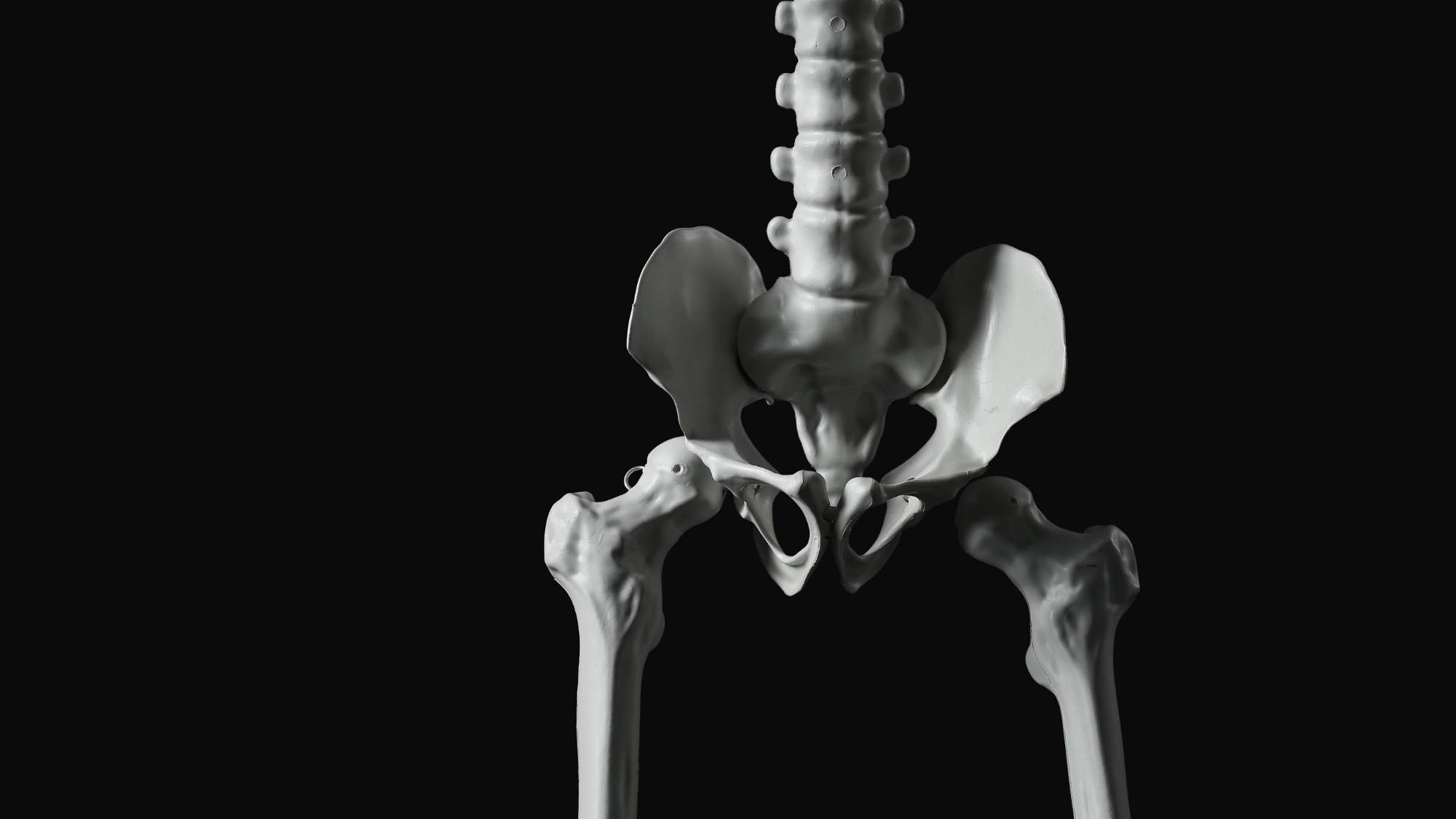
The test is called DXA, dual-energy X-ray absorptiometry, often written DEXA. It measures how much mineral is packed into a given area of bone.
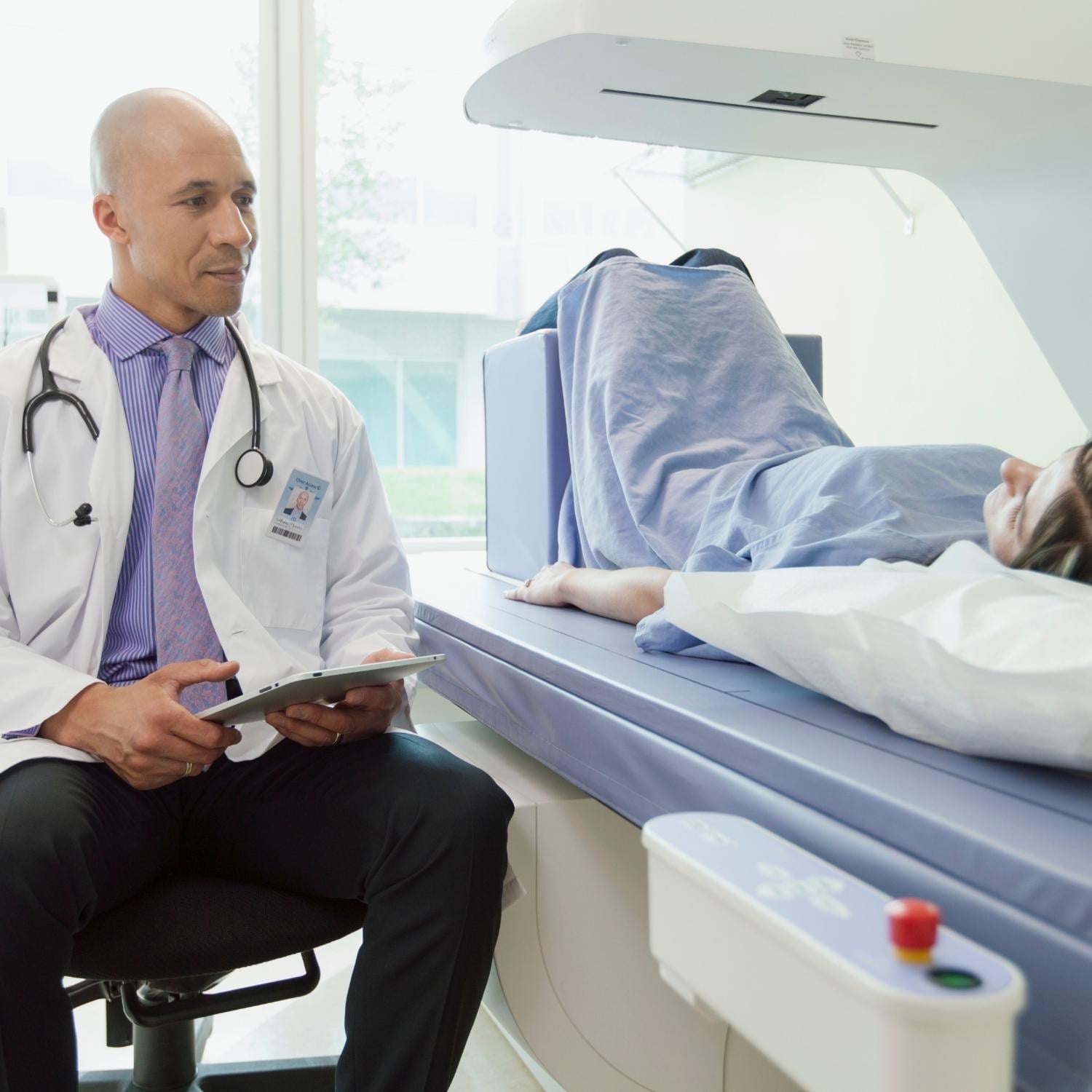
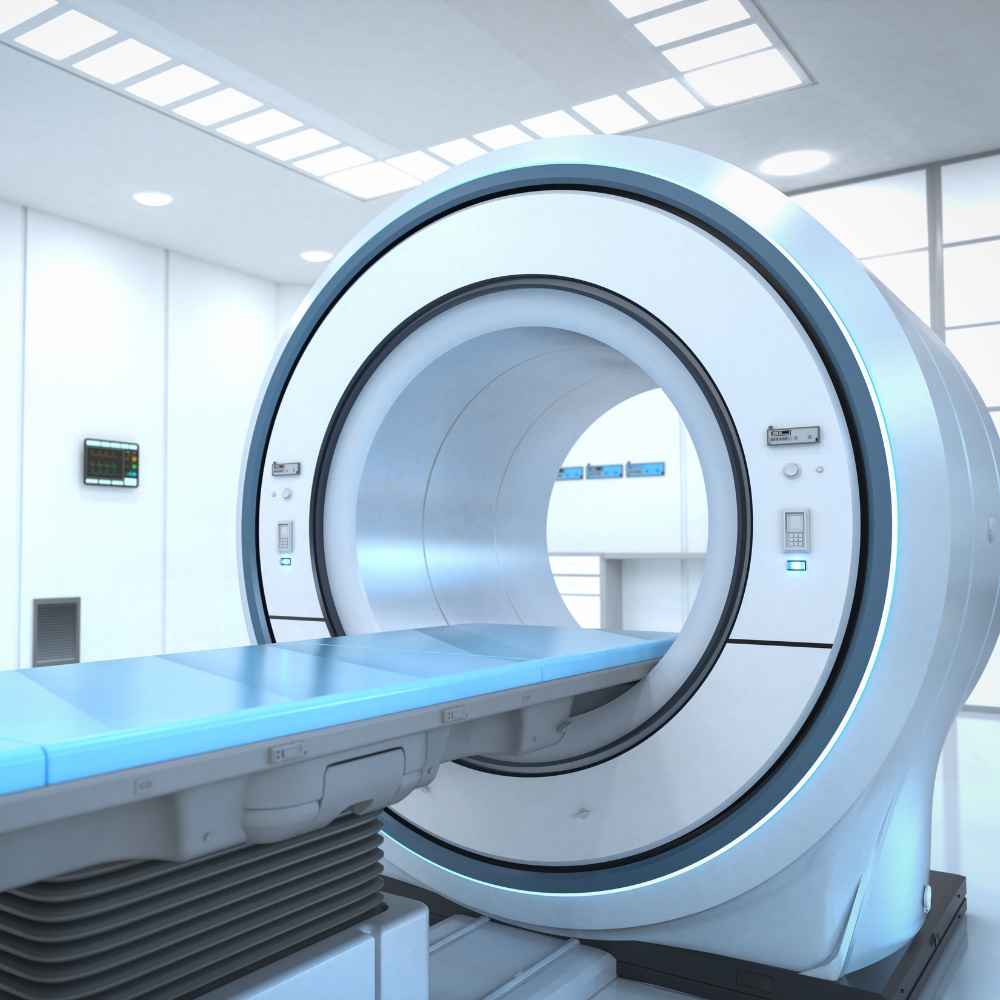
You lie on your back on a padded table, fully clothed if your clothing has no metal, while a scanning arm passes above you. Nothing touches you and nothing encloses you, so this is emphatically not an MRI tube and there is no reason for claustrophobia. You are not injected with anything.
Two sites are measured, your lumbar spine and one hip, specifically the femoral neck and total hip. These are used because they are where osteoporotic fractures do the most damage and because they are the sites the treatment guidelines are built around. The whole thing takes 10 to 30 minutes, most of which is positioning.
Radiation dose is about 0.001 mSv, less than a tenth of a chest X-ray and roughly what you would absorb from the natural environment in three hours of ordinary life.
Some people also have a Vertebral Fracture Assessment, a low-dose side view of the spine taken on the same machine. It adds a few minutes and looks for compression fractures in the vertebrae, which matter enormously because most vertebral fractures never cause noticeable pain and go completely unrecognized.
Learn more about our bone density testing service in King City.
Understanding Your T-Score
Your report will give you a T-score and, sometimes, a Z-score.
The T-score compares your bone density to that of a healthy young adult at peak bone mass, expressed in standard deviations. A score of −1.0 and above is normal. Between −1.1 and −2.4 is osteopenia, meaning low bone mass. A score of −2.5 and below is osteoporosis. A score of −2.5 or below combined with one or more fragility fractures is severe or established osteoporosis. T-scores are used for postmenopausal women and men aged 50 and over.
The Z-score compares you to people your own age and sex, and is used for premenopausal women and men under 50. Because it is age-matched, an unusually low Z-score suggests something other than ordinary age-related loss is happening.
Here is what surprises people: your T-score alone does not determine whether you need treatment. Ontario and Canada use FRAX, a calculator that combines your bone density with age, sex, BMI, previous fracture, parental hip fracture, smoking, glucocorticoid use, rheumatoid arthritis and alcohol intake to produce a ten-year probability of a major osteoporotic fracture.
Under the 2023 thresholds, a ten-year risk of 20 per cent or higher carries a strong recommendation to start therapy. Between 15 and 20 per cent is a conditional recommendation and a shared decision with your clinician. Under 15 per cent, treatment is generally not recommended. Notably, the 2023 guideline abandoned the older low, moderate and high risk labels in favour of these explicit percentage thresholds, so if you have an older report saying “moderate risk,” it is worth asking your clinician to recalculate.
Two rules override the arithmetic entirely: a fragility fracture of the hip or a vertebra, or more than one fragility fracture, places you in the high-risk category regardless of what your BMD says.
Please discuss your results with the clinician who ordered the test. We produce the measurement; they hold the rest of your clinical picture, and the number only means something in that context.
Common Questions About OHIP and Bone Density Testing
Does OHIP cover a bone density test?
Yes, when ordered by a physician or nurse practitioner. Only axial DXA of the hip and spine is covered, and there is no charge to you.
How often can I have a bone density test in Ontario?
For routine monitoring over age 50, generally once every three years or longer based on your FRAX-calculated fracture risk. More frequent testing is permitted where clinically necessary and documented. Patients under 50 are assessed on clinical appropriateness.
Do I need a referral?
Yes, a requisition from a physician or nurse practitioner.
Can I drink milk before a bone density test?
Yes. Dietary calcium is fine. The restriction is on calcium supplements, which should stop 24 hours before.
How long does it take?
About 10 to 30 minutes. You lie on an open table and nothing encloses you.
Is it safe?
Very. About 0.001 mSv, less than a tenth of a chest X-ray.
Who orders a bone density test?
Your family doctor or nurse practitioner most often. Rheumatologists, endocrinologists, gynaecologists and fracture clinics also order them routinely.
What does a T-score of −2.3 mean?
That falls in the osteopenia range. It does not automatically mean treatment, as your FRAX ten-year fracture risk is what guides that decision.
Are pharmacy heel scans the same thing?
No. Peripheral devices are not equivalent to axial DXA, are not what the guidelines are built on, and are not OHIP-covered.
Booking Your OHIP Bone Density Test in King City
Bone mineral density scans at King City Diagnostic Imaging are performed by appointment and are covered by OHIP when ordered by a physician or nurse practitioner.
We are at Unit 1, Building H, 1700 King Road, King City, open Monday to Friday from 8:30 a.m. to 5:30 p.m. and Saturday from 8:30 a.m. to 5:00 p.m., closed statutory holidays. We are 10 to 15 minutes from Richmond Hill and a short drive from Aurora, Newmarket, Vaughan, Maple, Oak Ridges, Nobleton and Kleinburg, with free surface parking directly outside, which for anyone managing mobility issues or recovering from a fracture is not a trivial consideration.
If you are also due for a mammogram, ask when you book. We can often schedule both in a single visit, and both matter most for the same group of people. One trip, one parking spot, one morning.
You can book your appointment online or contact our clinic with any questions. General information on OHIP coverage is available on the Government of Ontario’s website, and guidance on osteoporosis is published by Osteoporosis Canada.