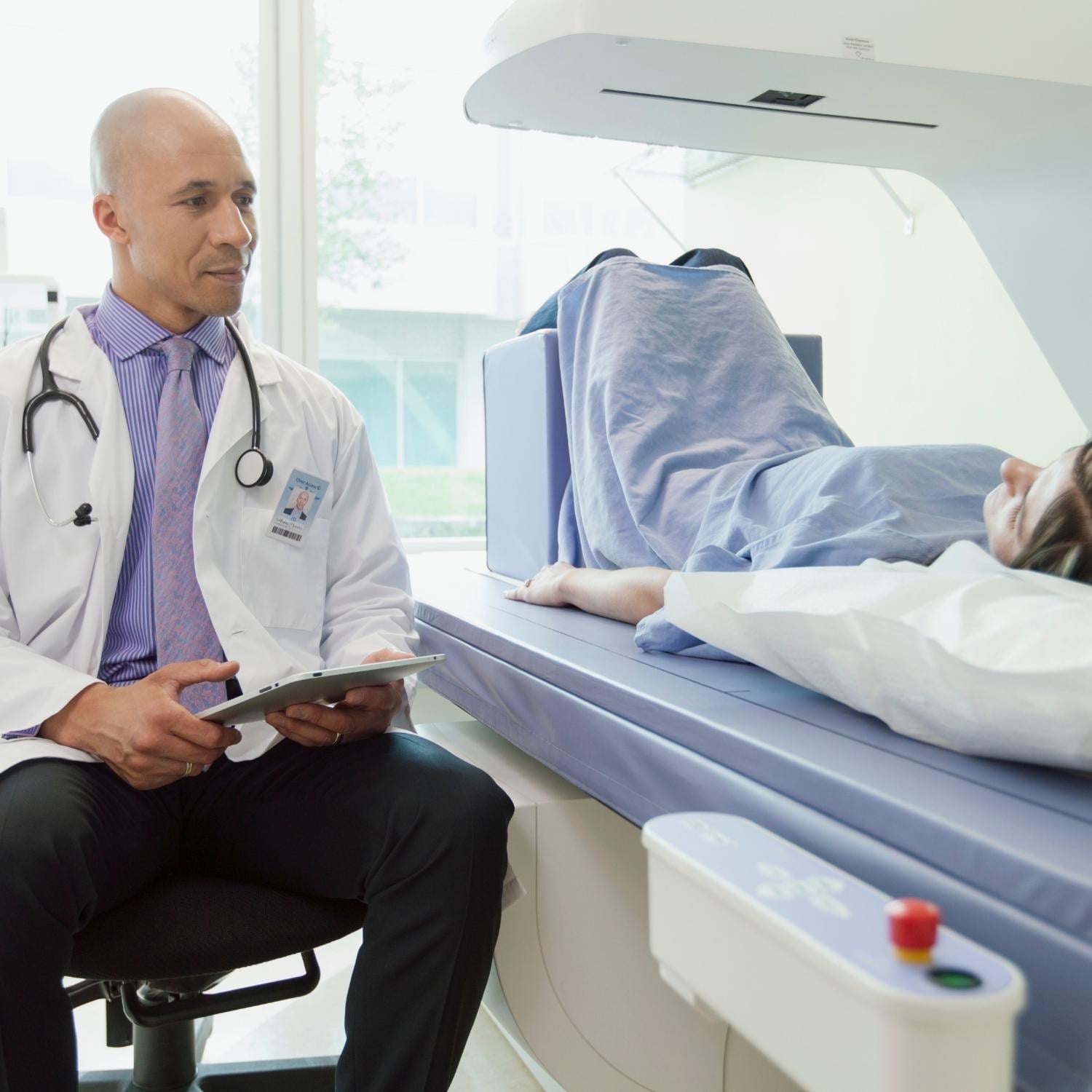
For most of the last two decades, a woman in her forties in Ontario who wanted a screening mammogram had to ask her family doctor for a requisition, and sometimes had to make the case for it. That changed on October 8, 2024, when Ontario lowered the self-referral age for the Ontario Breast Screening Program (OBSP) from 50 to 40. If you are between 40 and 74, live in Ontario, and have a valid health card, you can now book a screening mammogram yourself. No requisition, and no cost to you. This guide explains who qualifies, how often to come, what the appointment is actually like, and what a callback does and does not mean.
Quick Facts: Ontario Breast Screening Program
Ontario residents aged 40 to 74 can self-refer for an OHIP-covered screening mammogram with no doctor’s referral, using only a valid health card. Screening is generally every two years, or annually for those with extremely dense breast tissue. The appointment takes about 15 minutes and involves four images. Ontario Health reports roughly 155,000 people aged 40 to 49 have been screened since the age change took effect. King City Diagnostic Imaging provides OBSP screening mammograms by appointment, including Saturdays.

Ontario residents aged 40 to 74 can self-refer to the Ontario Breast Screening Program with only a health card.
Who Qualifies for the Ontario Breast Screening Program
The program runs two streams: average risk and high risk.
Average risk, ages 40 to 74. You can self-refer if you are 40 to 74 years old, hold a valid Ontario health card, have no breast symptoms, have no personal history of breast cancer, have not had a mastectomy, and have not had a screening mammogram in the past 11 months. Transfeminine individuals are eligible after five consecutive years of feminizing hormone therapy.
The “no symptoms” requirement matters more than most people realize. Screening and diagnosis are two different pathways. If you have found a lump or noticed a change in your breast, do not book a screening mammogram. See your doctor or nurse practitioner instead, and you will be sent for diagnostic imaging, which is also covered by OHIP, is scheduled differently, and is read with your specific symptom in mind. Booking a screening appointment when you have a symptom can actually slow down your care.
Age 75 and over. Screening remains covered by OHIP, but the program stops sending automatic recall letters and a referral from your primary care provider is required to continue. After 74, the decision becomes an individual one made with your clinician.
High risk, ages 30 to 69. This is a separate, more intensive stream that always requires a referral. You may qualify if you carry a known pathogenic gene variant such as BRCA1, BRCA2, TP53 or PALB2; are a first-degree relative of a known carrier who has had genetic counselling and declined testing; have been assessed at a genetics clinic as having a lifetime breast cancer risk of 25 per cent or higher; or received radiation therapy to the chest before age 30, at least eight years ago. Participants receive an annual mammogram plus a breast MRI, or a screening ultrasound where MRI is not medically appropriate.
How Often You Should Be Screened
For average-risk participants aged 50 to 74, the interval is every two years. Cancer Care Ontario applies the same two-year interval to the 40 to 49 group, while encouraging people in their forties to discuss the tradeoffs with their provider first.
Some participants move to annual rather than biennial screening. The triggers are breast density category D (extremely dense tissue), a documented high-risk lesion on a previous biopsy such as atypical ductal hyperplasia or lobular carcinoma in situ, certain family history patterns, or a direct recommendation from the reporting radiologist.
You do not need to track this yourself. The Ontario Breast Screening Program sends a recall letter when you are due.
What the Tradeoffs Actually Look Like
Ontario is unusually transparent about the benefits and harms of screening, and the figures are worth repeating rather than glossing over. Cancer Care Ontario publishes the following comparison for every 1,000 women screened, starting at age 40 versus starting at age 50.
Starting at 40: up to 9 breast cancer deaths avoided, up to 200 unnecessary biopsies, and 12 cases of overdiagnosis. Starting at 50: up to 7 deaths avoided, up to 150 unnecessary biopsies, and 10 cases of overdiagnosis.
Starting earlier means fewer deaths. It also means more false alarms, more biopsies that turn out to be nothing, and more treatment of cancers that would never have caused harm. Both statements are true at the same time. Ontario’s decision was to make the earlier start available and let people choose, which is why the program still encourages a conversation with your provider even though it no longer requires the referral.
For context on scale, the Canadian Cancer Society projected roughly 12,120 new breast cancer diagnoses and 2,020 deaths in Ontario in 2025. It remains the most commonly diagnosed cancer among women in the province.

How to Prepare for Your Mammogram
Skip deodorant, antiperspirant, body lotion and talcum powder on the day of your exam. This is not fussiness. Many of these products contain metallic particles, aluminium in particular, that appear on the images as small bright flecks resembling calcifications. A radiologist then has to decide whether those flecks are on your skin or inside your breast, and that uncertainty is exactly the sort of thing that generates an unnecessary callback. If you forget, tell the technologist and we can usually clean the area and proceed.
Wear a two-piece outfit. You undress from the waist up, so a dress means changing completely.
Time it for comfort. If your breasts are tender before your period, book for roughly a week after it ends. Cutting back on caffeine for a few days beforehand helps some people.
Bring prior mammograms if they were done elsewhere. Comparison images are one of the most useful tools a radiologist has, and a change from last year is far more informative than a single snapshot.
Tell us if you have implants when you book, so the technologist can plan the appropriate positioning technique.
For preparation instructions covering every exam we offer, see our full imaging exam preparation guide.
What Happens During the Appointment
Plan for about 20 to 30 minutes in the building. The imaging itself takes closer to 15.
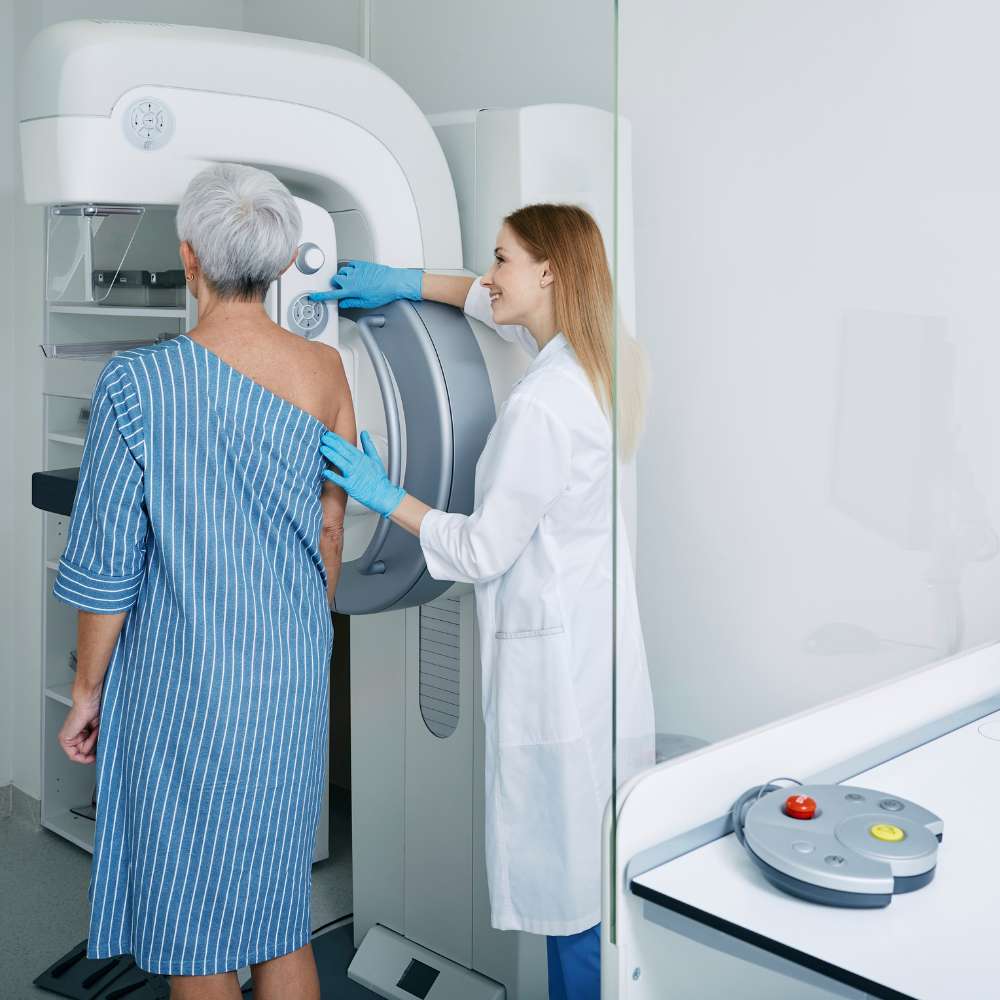
Four images are taken, two of each breast, one from above and one from the side. For each image a clear plate lowers and compresses the breast for roughly 10 to 15 seconds. Compression is the uncomfortable part, and there is no point pretending otherwise. It is also what makes the image readable, because it spreads the tissue out so overlapping structures cannot hide anything, and it allows a lower radiation dose. It does not damage breast tissue. Tell the technologist if it hurts, as there is usually room to adjust.
On radiation: a two-view mammogram delivers about 0.4 millisieverts. The average Canadian absorbs roughly 1.8 mSv per year from the natural environment alone, from soil, air, food and cosmic radiation. A mammogram is therefore roughly eleven weeks of ordinary background exposure, delivered in a few seconds.
Learn more about our mammography service in King City.
Your Results, and What a Callback Means
Your images are read by a radiologist after you leave. If everything is normal, a report goes to your family doctor or nurse practitioner, and you receive a letter telling you when you are next due. Turnaround varies by site, and many Ontario centres aim for about ten days. If something needs a closer look, the screening site contacts your provider and helps arrange follow-up imaging.
Here is the part worth understanding before it happens to you. In Ontario, roughly 15 per cent of first-time screens and 7 per cent of repeat screens are called back for more testing. The positive predictive value of that callback is about 4 per cent on a first screen and 8 per cent on a repeat screen. Read the other way around: between 92 and 96 per cent of people who get called back do not have cancer.
A callback usually means a second, more targeted mammogram. About half the time it also means an ultrasound. A smaller number of people go on to a biopsy, and most of those biopsies come back benign. This is why callbacks are more common on a first mammogram, because the radiologist has no prior images for comparison and anything unfamiliar has to be checked. On your second visit, they can see whether that finding was there last time and unchanged.
Ontario data also shows that almost everyone with an abnormal screening result reaches a definitive diagnosis within six months, and most far sooner.
Breast Density and What Your Letter Tells You
Since July 2021, every OBSP screening report includes your breast density, and all four categories are reported back to you: A, almost entirely fatty; B, scattered fibroglandular density; C, heterogeneously dense; and D, extremely dense.
Density matters for two reasons. Dense tissue appears white on a mammogram, and so do most tumours, so dense tissue can mask a cancer. Density is also a risk factor in its own right, with the densest breasts carrying several times the risk of the least dense.
If you are category D, Ontario moves you to annual screening. What Ontario does not currently do is offer supplemental ultrasound or MRI on the basis of density alone, because Cancer Care Ontario’s position is that the evidence is not yet strong enough to recommend it program-wide. If you have dense breasts and want to discuss additional imaging, that is a conversation with your doctor or nurse practitioner, and any supplemental exam would be arranged outside the OBSP.
Density is also not permanent. It commonly decreases with age, and if yours drops out of category D you may return to a two-year interval.
Common Questions About Screening Mammograms
Can I get a mammogram in Ontario without a referral?
Yes, if you are 40 to 74, hold a valid Ontario health card, and have no breast symptoms. Ages 75 and over need a referral from a primary care provider, though the exam remains covered by OHIP.
Is a mammogram free in Ontario?
Screening mammograms through the OBSP are fully covered by OHIP. There is no charge to you.
How often should I get a mammogram?
Every two years for average-risk participants, or annually if you have extremely dense breast tissue, certain biopsy findings, or are in the High Risk OBSP.
Does it hurt?
Compression is uncomfortable for most people and painful for some. It lasts 10 to 15 seconds per image, four images in total. Scheduling about a week after your period ends helps if your breasts are cycle-sensitive.
What if I have breast implants?
You can still be screened. Tell us when you book so the technologist can use the appropriate positioning technique.
I have a lump. Should I book a screening mammogram?
No. See your doctor or nurse practitioner. Symptoms require diagnostic imaging, which is a different and usually faster pathway.
How long until I get results?
A report goes to your primary care provider and you receive a letter about your next screening date. Most Ontario centres aim for around ten days.
I got called back. Should I be worried?
Understandably unsettling, but 92 to 96 per cent of Ontario callbacks turn out not to be cancer, and callbacks are especially common on a first mammogram.
Booking Your Ontario Breast Screening Program Mammogram in King City
King City Diagnostic Imaging is located at Unit 1, Building H, 1700 King Road, King City, roughly 10 to 15 minutes from Richmond Hill and a straightforward drive from Aurora, Newmarket, Nobleton, Kleinburg and Maple, with free parking directly outside.
Mammography runs by appointment, Monday to Friday from 8:30 a.m. to 5:30 p.m. and Saturday from 8:30 a.m. to 5:00 p.m. The Saturday hours exist specifically so you do not have to take a day off work for a fifteen-minute test. We are closed on statutory holidays.
If you are 40 to 74 and screening, you do not need a requisition. Just bring your health card. You can book your appointment online or contact our clinic with any questions. General information on breast screening is available from the Government of Ontario. To see everything we offer, visit our services page.